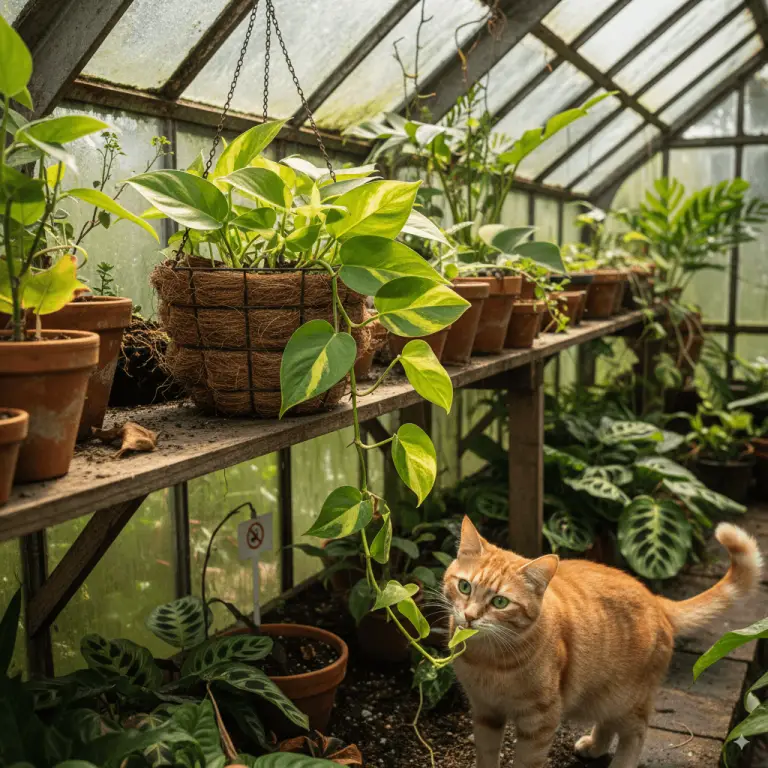
Pothos Brazil Vs Philodendron Brasil – Your Definitive Guide
Have you ever stood in a nursery, mesmerized by two vining plants with gorgeous, painterly leaves splashed in shades of green and chartreuse? You pick them up, turn them over, and think, “Wait… aren’t these the same plant?”
If you’ve ever felt this wave of confusion, you’re in good company! It’s one of the most common mix-ups in the houseplant world. The good news is, you’ve come to the right place. I promise that by the end of this guide, you’ll be able to confidently tell these green beauties apart and give each one exactly what it needs to thrive.
We’re about to embark on a deep dive into the great pothos brazil vs philodendron brasil debate. We’ll uncover their secret identifying features, create the perfect care routine for each, tackle common problems, and even explore some eco-friendly best practices for your indoor jungle. Let’s get growing!
What's On the Page
- 1 Meet the Contenders: A Quick Introduction
- 2 The Great Debate: A Pothos Brazil vs Philodendron Brasil Deep Dive
- 3 Light, Water, and Soil: A Comprehensive Care Guide
- 4 Common Problems with Pothos Brazil vs Philodendron Brasil (And How to Fix Them)
- 5 Sustainable Growth: Eco-Friendly Best Practices
- 6 Frequently Asked Questions About Pothos Brazil vs Philodendron Brasil
- 7 Go Forth and Grow!
Meet the Contenders: A Quick Introduction
Before we put them head-to-head, let’s get formally acquainted. While they look like twins, they actually belong to different plant families, which is the root of their subtle yet distinct differences.
On one side, we have the Pothos ‘Brazil’ (Epipremnum aureum ‘Brazil’). Pothos are famous for being virtually indestructible, earning them the nickname “devil’s ivy.” The ‘Brazil’ variety brings a splash of artistry to this hardy plant with its vibrant, irregular variegation.

🌿 The Companion Planting & Gardening Book (eBook)
Bigger harvests, fewer pests — natural pairings & simple layouts. $2.40
Get – $2.40
🪴 The Pest-Free Indoor Garden (eBook)
DIY sprays & soil tips for bug-free houseplants. $1.99
Get – $1.99On the other side is the Philodendron ‘Brasil’ (Philodendron hederaceum ‘Brasil’). This plant is a cultivar of the classic Heartleaf Philodendron, beloved for its graceful, trailing vines and unmistakably heart-shaped leaves. The ‘Brasil’ variety adds a stunning stroke of lime green or yellow right down the center of each leaf.
Don’t worry—these plants are perfect for beginners! Their similarities in care make them forgiving, but knowing their differences is the key to unlocking their full potential.
The Great Debate: A Pothos Brazil vs Philodendron Brasil Deep Dive
Alright, let’s get out our magnifying glasses. Once you know what to look for, telling these two apart becomes a fun little party trick for your plant-loving friends. This is the ultimate pothos brazil vs philodendron brasil guide to identification.
Leaf Shape and Texture: The First Clue
The most immediate difference is in the leaves. At a glance, they’re similar, but a closer look reveals their unique personalities.
- Philodendron ‘Brasil’: The leaves are distinctly heart-shaped. They have a more pronounced curve where the leaf meets the stem, creating that classic Valentine’s heart look. The texture is softer, thinner, and has a more matte or satin-like finish.
- Pothos ‘Brazil’: The leaves are more spade-shaped or elongated. While they have a heart-like base, they are generally thicker, waxier, and have a glossier sheen. They feel more substantial and leathery to the touch.
Stem and Growth Habits: How They Grow
Next, take a look at the stems and how the plant carries itself. This is another area where their family traits shine through.
- Philodendron ‘Brasil’: The stems (or vines) are typically thinner, rounder, and more delicate. This gives the plant a more graceful, flowing, and “drapey” appearance as it trails. Its aerial roots are thin and wiry.
- Pothos ‘Brazil’: The stems are noticeably thicker and more robust. The plant has a chunkier, more aggressive growth habit. Its aerial roots are often just nubs or thicker, single roots that cling fiercely to surfaces.
The Telltale Petiole and Cataphyll: Your Expert Trick
Ready for the master-level secret? This is the one surefire way to know what you’re holding. It all comes down to how new leaves emerge.
First, let’s look at the petiole—that’s the little stalk that connects the leaf to the main stem. Run your finger along it.
- A Pothos ‘Brazil’ petiole has a slight indentation or groove running along it, almost like a little channel.
- A Philodendron ‘Brasil’ petiole is perfectly smooth and rounded all the way around. No groove!
Now for the real clincher: the cataphyll. This sounds technical, but it’s simple! A cataphyll is a small, waxy sheath that protects a new leaf as it forms on a Philodendron. The new leaf emerges from this sheath, which then dries up and falls off.
Pothos do not have cataphylls. Their new leaves simply emerge from the previous leaf and unfurl. If you see those little papery, brown remnants clinging to the stem, you are 100% looking at a Philodendron ‘Brasil’. It’s their unique calling card!
Light, Water, and Soil: A Comprehensive Care Guide
Now that you’re an identification pro, let’s talk about keeping these beauties happy. Fortunately, their needs are very similar, which is why they’re often grouped together. This pothos brazil vs philodendron brasil care guide will cover all the bases.
Lighting Needs
Both plants thrive in bright, indirect light. Think of a spot near an east-facing window or a few feet back from a south or west-facing window. This level of light will keep their stunning variegation vibrant and bold.
Can they tolerate lower light? Yes, but with a trade-off. Their variegation will fade, and the leaves may become smaller. The Philodendron ‘Brasil’ is slightly more tolerant of lower light conditions than its Pothos counterpart.
Pro Tip: If your plant’s new leaves are coming in mostly solid green, it’s a clear sign it’s asking for more light!
Watering Wisdom
Overwatering is the number one enemy of both these plants. They would much rather be a little too dry than too wet. The best practice is to allow the top 50% of the soil to dry out completely between waterings.
A simple way to check is to stick your finger a few inches into the soil. If it feels damp, wait a few more days. They both give you clear signals when they’re thirsty:
- Philodendron ‘Brasil’: The leaves will start to look a little soft and may begin to curl inward slightly, like a taco.
- Pothos ‘Brazil’: The leaves will look noticeably droopy and wilted. It’s quite dramatic!
Don’t worry—a good drink will have them perked up and happy within a few hours. This is one of the key benefits of pothos brazil vs philodendron brasil; they communicate their needs clearly!
The Perfect Soil Mix
Forget dense, heavy potting soil from a bag. These plants are aroids, and their roots need to breathe! A chunky, airy, well-draining mix is non-negotiable for their long-term health.
You can create your own fantastic mix with this simple recipe:
- 1 part high-quality indoor potting soil
- 1 part perlite (for aeration)
- 1 part orchid bark (for chunkiness and moisture retention)
This blend allows water to flow through easily, preventing the dreaded root rot while still holding enough moisture for the plant to drink.
Common Problems with Pothos Brazil vs Philodendron Brasil (And How to Fix Them)
Even the easiest plants can run into trouble. Here’s a quick guide to troubleshooting some common problems with pothos brazil vs philodendron brasil.
Yellowing Leaves
This is almost always a sign of overwatering. The soil is staying wet for too long, and the roots are suffocating. Immediately scale back your watering schedule and ensure the pot has proper drainage. If the problem persists, you may need to repot into a chunkier soil mix.
Leggy Growth
Are the vines getting long and sparse, with lots of space between the leaves? This means the plant is stretching to find more light. Move it to a brighter location. To fix the existing legginess, don’t be afraid to prune it back! Trimming the vines will encourage the plant to branch out, creating a much fuller, bushier look.
Pest Patrol
While generally pest-resistant, they can occasionally attract common nuisances like spider mites or mealybugs. Inspect your plants regularly, especially the undersides of leaves. If you spot any pests, isolate the plant and treat it with a gentle insecticidal soap or a diluted neem oil solution.
Sustainable Growth: Eco-Friendly Best Practices
Part of being a great gardener is caring for our planet, too. Incorporating sustainable pothos brazil vs philodendron brasil practices is easy and rewarding.
- Propagate and Share: Both plants are incredibly easy to propagate. Simply snip a piece of vine with a few nodes, place it in water, and watch it grow roots! This is a fantastic, zero-cost way to create more plants for yourself or to share with friends.
- Choose Peat-Free Soil: Many traditional potting mixes use peat moss, which is harvested from sensitive bog ecosystems. Look for or create your own soil mixes using sustainable alternatives like coco coir.
- Natural Fertilizers: Instead of synthetic chemicals, consider using natural options like worm castings or compost tea during the growing season to give your plants a gentle, eco-friendly boost.
Frequently Asked Questions About Pothos Brazil vs Philodendron Brasil
Which one is easier to care for?
This is a tough one, as both are incredibly easy! However, if we had to choose, the Pothos ‘Brazil’ is arguably a tiny bit more resilient and forgiving of neglect, truly living up to its “devil’s ivy” reputation.
Can I plant Pothos Brazil and Philodendron Brasil together in the same pot?
Absolutely! Because their care requirements for light, water, and soil are so similar, they make wonderful pot-mates. Their slightly different leaf shapes and textures can create a beautiful, lush, and varied display.
Why is my plant’s beautiful variegation fading?
The most common culprit is insufficient light. Variegation requires more energy to maintain, so if the plant isn’t getting enough light, it will produce more solid green leaves (which are more efficient at photosynthesis) to compensate. Move it to a brighter spot!
Which one grows faster?
In optimal conditions, the Pothos ‘Brazil’ tends to have a slightly faster and more vigorous growth rate than the Philodendron ‘Brasil’. It’s a true powerhouse grower!
Go Forth and Grow!
There you have it—the mystery is solved! You are now fully equipped with the knowledge to walk into any plant shop and spot the difference between a Pothos ‘Brazil’ and a Philodendron ‘Brasil’ from across the room. You know to look for that heart shape, feel for the waxy texture, and check for the secret clues in the petiole and cataphylls.
More importantly, you have all the pothos brazil vs philodendron brasil tips you need to provide them with a loving home where they can flourish. Both are stunning, rewarding, and wonderfully low-maintenance plants that bring so much life and color to a space.
Whichever one you choose (or why not both?), you’re adding a resilient and beautiful friend to your collection. Happy gardening!

- Black Cherry Tomato Determinate Or Indeterminate – Your Ultimate Guide - January 10, 2026
- Peppers And Tomatoes Planted Together – Your Ultimate Guide To A - January 10, 2026
- Sun Sugar Tomato Determinate Or Indeterminate – Unlock Sweet Success - January 10, 2026