Philodendron Houseplant Giant – Your Ultimate Guide To Lush
Have you ever scrolled through home decor photos and stopped dead in your tracks at the sight of a magnificent, room-defining plant with leaves the size of dinner plates? That stunning green giant, the one that instantly transforms a simple corner into a lush, tropical escape? Chances are, you were admiring a philodendron houseplant giant.
The thought of bringing such a large plant into your home can feel both exciting and a little intimidating. You want that incredible “jungle vibe,” but you worry if you have what it takes to keep such a majestic creature happy and thriving.
Imagine your living room, anchored by a vibrant philodendron with glossy, enormous leaves unfurling, purifying your air and becoming a living piece of art that wows every guest. It’s more than just a plant; it’s a statement, a companion, and a source of daily joy.
The good news? You absolutely can do it. In this complete guide, we’re going to demystify everything you need to know. We’ll walk you through the essential tips and tricks to not only keep your giant philodendron alive but to help it flourish into the breathtaking specimen you’ve been dreaming of.
What's On the Page
- 1 What Exactly Is a “Giant” Philodendron?
- 2 The Ultimate Philodendron Houseplant Giant Care Guide
- 3 Encouraging Giant Growth: Pro Tips for Maximum Size
- 4 Common Problems with Philodendron Houseplant Giant (and Easy Fixes!)
- 5 The Benefits of a Philodendron Houseplant Giant in Your Home
- 6 Sustainable and Eco-Friendly Philodendron Care
- 7 Frequently Asked Questions About Your Giant Philodendron
- 8 Go Forth and Grow Your Indoor Jungle!
What Exactly Is a “Giant” Philodendron?
First, let’s clear something up. “Giant Philodendron” isn’t one single type of plant. It’s more of a loving nickname for several species within the Philodendron genus (and some close relatives!) known for their impressively large foliage. They are the titans of the indoor plant world.

🌿 The Companion Planting & Gardening Book (eBook)
Bigger harvests, fewer pests — natural pairings & simple layouts. $2.40
Get – $2.40
🪴 The Pest-Free Indoor Garden (eBook)
DIY sprays & soil tips for bug-free houseplants. $1.99
Get – $1.99When you’re looking for a philodendron houseplant giant, you might encounter a few different popular varieties. Each has its own unique charm, but they all share a love for similar growing conditions.
- Philodendron giganteum: As the name suggests, this one is a true giant! It boasts enormous, elephant-ear-shaped leaves that can reach several feet long in ideal conditions. It’s a showstopper that grows in a clumping, self-heading form.
- Thaumatophyllum bipinnatifidum (formerly Philodendron selloum or Hope Philodendron): You’ll recognize this one by its deeply lobed, “split” leaves. While technically reclassified into its own genus, it’s still widely known and sold as a Philodendron. It grows a thick, tree-like trunk over time.
- Philodendron melanochrysum: While its juvenile leaves are beautiful, this vining variety produces stunningly large, dark, velvety leaves when given a moss pole to climb. The transformation is truly a sight to behold.
- Philodendron gloriosum: This is a “crawler” rather than a climber. It sends its rhizome across the top of the soil, producing huge, heart-shaped, velvety leaves with striking white veins. It needs a wide, rectangular pot to thrive.
The Ultimate Philodendron Houseplant Giant Care Guide
Ready to learn how to keep your gentle giant happy? Don’t worry—their needs are straightforward once you understand the basics. This is your complete philodendron houseplant giant care guide for success.
Let There Be Light (But Not Too Much!)
These plants originate from the floors of tropical rainforests, where they receive dappled sunlight through the canopy. Your goal is to replicate that environment.
Provide your philodendron with bright, indirect light. Think of a spot a few feet away from an east-facing window, or near a south or west-facing window that is filtered by a sheer curtain. Too much direct sun will scorch their magnificent leaves, leaving ugly brown marks.
The Perfect Drink: Watering Best Practices
Overwatering is the number one mistake plant parents make! These giants are surprisingly sensitive to “wet feet,” which can lead to root rot. The best method is to water thoroughly, then allow the soil to dry out partially before watering again.
Stick your finger about two inches into the soil. If it feels dry at that depth, it’s time to water. When you do, give it a good soak until water runs freely from the drainage holes. Then, dump out any excess water from the saucer. Never let your plant sit in a puddle of water.
Creating a Tropical Paradise: Humidity & Temperature
Remember their rainforest origins? Giant philodendrons adore humidity. While they can tolerate average household humidity, they will truly thrive with a little extra moisture in the air. You’ll be rewarded with larger, healthier leaves.
Easy ways to boost humidity include:
- Placing a humidifier nearby.
- Grouping it with other plants (they release moisture through transpiration).
- Setting the pot on a pebble tray filled with water (ensure the pot isn’t sitting in the water).
They also prefer warm temperatures, ideally between 65-85°F (18-29°C). Keep them away from cold drafts, air conditioning vents, or sudden temperature drops.
A Feast for Your Giant: Soil and Fertilizer Needs
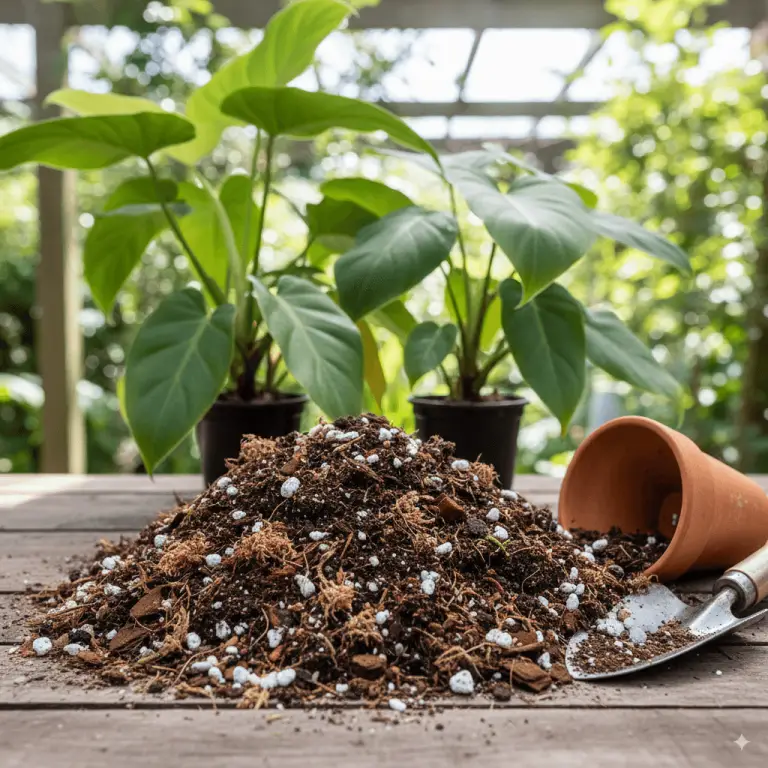
Proper soil is crucial for preventing root rot. Your philodendron houseplant giant needs a soil mix that is chunky, airy, and extremely well-draining. A standard potting mix is often too dense and will hold too much water.
You can buy a pre-made “aroid mix” or create your own simple blend: one part high-quality indoor potting mix, one part orchid bark, and one part perlite. This creates the perfect balance of moisture retention and aeration.
During the growing season (spring and summer), feed your plant every 4-6 weeks with a balanced liquid fertilizer, diluted to half-strength. In the fall and winter, you can reduce feeding to every 8 weeks or stop altogether as the plant’s growth slows.
Room to Grow: Potting and Repotting
Your giant will eventually need a bigger home. You’ll know it’s time to repot when you see roots coming out of the drainage holes, the plant is drying out much faster than usual, or its growth has stalled. Typically, this is every 1-2 years.
Choose a new pot that is only 2-3 inches larger in diameter than the current one. Going too big too fast can lead to the soil staying wet for too long. And always, always ensure your new pot has drainage holes!
Encouraging Giant Growth: Pro Tips for Maximum Size
Want to know how to philodendron houseplant giant leaves get so big? It’s not just about basic care; it’s about giving them the right encouragement. These professional philodendron houseplant giant tips will make a huge difference.
The Importance of Climbing Support
For vining species like the Philodendron melanochrysum, providing something to climb is the single most important factor in getting massive leaves. In nature, their aerial roots anchor them to trees as they climb toward the light.
Giving them a moss pole or coir totem mimics this natural habit. As the aerial roots grow into the moist pole, it signals to the plant that it is secure and can support larger foliage. The leaves will literally increase in size with each new unfurling as it climbs higher.
Strategic Pruning for Health and Shape
Don’t be afraid to prune your plant! Removing any yellowing or dead leaves allows the plant to redirect its energy toward new, healthy growth. You can also prune leggy vines to encourage a fuller, bushier appearance. Simply snip the stem with clean, sharp scissors just after a node (the little bump where a leaf grows from).
Keeping Those Big Leaves Clean
Those huge leaves are masters of photosynthesis, but they are also dust magnets! A thick layer of dust can block light and hinder the plant’s ability to feed itself. It also creates a hiding spot for pests.
Once a month, gently wipe down the top and bottom of each leaf with a soft, damp cloth. This simple act keeps your plant breathing easy and looking its glossy best.
Common Problems with Philodendron Houseplant Giant (and Easy Fixes!)
Even the most experienced gardener runs into issues. The key is to spot them early and act fast. Here are some of the most common problems with philodendron houseplant giant and how to solve them.
“Why Are the Leaves Yellow?”
Yellowing leaves (chlorosis) are the plant’s way of telling you something is wrong. The most common culprit is overwatering. Check the soil moisture first. Other causes can be underwatering (the leaves will also look wilted), a nutrient deficiency, or simply an old, lower leaf dying off naturally, which is perfectly normal.
“What Are These Brown Spots or Crispy Edges?”
Crispy brown edges often point to a lack of humidity. Try the humidity-boosting tips mentioned earlier. Sudden brown spots in the middle of the leaf could be sunburn from too much direct light. If the spots are mushy and have a yellow halo, it could be a sign of a fungal issue from the soil staying too wet.
“Help! I See Pests!”
The most common pests are spider mites (look for fine webbing) and mealybugs (they look like tiny white cotton fluff). Isolate your plant immediately to prevent them from spreading. You can treat them by wiping them off with a cotton swab dipped in rubbing alcohol or spraying the plant thoroughly with an eco-friendly insecticidal soap or neem oil solution.
The Benefits of a Philodendron Houseplant Giant in Your Home
Beyond their stunning looks, there are so many wonderful benefits of philodendron houseplant giant ownership. They are more than just decoration.
- Natural Air Purifiers: Like many houseplants, philodendrons are excellent at filtering common airborne toxins like formaldehyde from the air, creating a healthier indoor environment.
- Biophilic Design: Bringing large-scale nature indoors is a core principle of biophilic design, which has been shown to reduce stress, improve mood, and increase creativity.
- A Sense of Accomplishment: There is immense satisfaction in watching a new, giant leaf slowly unfurl. Nurturing a large plant and watching it thrive is an incredibly rewarding hobby.
Sustainable and Eco-Friendly Philodendron Care
Being a plant parent can also be an opportunity to practice sustainability. A sustainable philodendron houseplant giant is a happy one, and these eco-friendly practices are easy to adopt.
DIY Peat-Free Soil Mixes
Peat moss, a common ingredient in potting soil, is harvested from peat bogs, which are vital and fragile ecosystems. You can create an excellent, eco-friendly philodendron houseplant giant soil mix using renewable resources like coco coir (a byproduct of the coconut industry) as a base instead of peat.
Natural Pest Control
Before reaching for chemical pesticides, always try gentler methods first. Neem oil, a natural extract from the neem tree, is fantastic for both preventing and treating common pests without harming you, your pets, or the environment.
Water Conservation Practices
Water wisely. Using a soil moisture meter can help you avoid watering unnecessarily, conserving water and protecting your plant from overwatering. If you have the space, setting up a rain barrel to collect rainwater for your plants is a fantastic, nutrient-rich, and sustainable option.
Frequently Asked Questions About Your Giant Philodendron
Are giant philodendrons toxic to pets?
Yes, unfortunately, all parts of the Philodendron plant contain calcium oxalate crystals, which are toxic to cats and dogs if ingested. They can cause oral irritation, swelling, vomiting, and difficulty swallowing. It’s best to place these plants out of reach of curious pets.
How fast do giant philodendrons grow?
In ideal conditions (good light, warmth, and humidity) during the spring and summer, they can grow quite quickly, often putting out a new, larger leaf every few weeks. Growth will slow down significantly in the fall and winter.
Can I grow a giant philodendron in a low-light room?
While they are often touted as low-light tolerant, a philodendron houseplant giant will not thrive or produce its signature large leaves in low light. They will become leggy and small-leafed. They need bright, indirect light to flourish.
My philodendron is getting too big! What can I do?
This is a great problem to have! You can easily control its size by pruning it back. Even better, the cuttings can be easily propagated in water or soil to create new plants to keep or share with friends.
Go Forth and Grow Your Indoor Jungle!
Welcoming a giant philodendron into your home is a journey filled with rewarding moments. From the thrill of spotting a new leaf spike to the pride you feel as it unfurls into a magnificent green banner, these plants offer so much more than just foliage.
You now have the complete philodendron houseplant giant guide in your hands. You understand their needs for light, water, and support, and you’re prepared to tackle any common problems that arise. Trust your instincts, enjoy the process, and get ready to watch your very own indoor jungle come to life.

- Do Beefsteak Tomatoes Need A Trellis – Essential Guide For Bountiful - January 9, 2026
- String Trellis For Tomatoes – Your Ultimate Guide To Bountiful, - January 9, 2026
- How To Make Tomato Plants Stronger – Your Ultimate Guide To Bountiful - January 9, 2026